

Hydration for Senior Dogs: Supporting Comfort, Mobility and Daily Wellbeing
- May 5
- 5 min read
Updated: Jun 4
As dogs age, their needs begin to change in subtle but important ways. Energy levels shift, mobility may reduce, and recovery can take longer than it once did. While food and hydration for senior dogs need to be adjusted to reflect these changes, it is frequently overlooked.
For senior dogs in the UK, maintaining consistent and effective hydration becomes increasingly important. Hydration supports circulation, tissue function, mobility, and daily comfort, particularly as the body naturally becomes less efficient with age.
Ageing is not simply about getting older. In many cases, it reflects a gradual reduction in the body's ability to perform the functions it once managed with ease. Hydration plays a foundational role in supporting that efficiency and helping the body maintain balance over time.
Why hydration for senior dogs matters more as dogs age
Ageing affects how the body regulates, absorbs, and uses water.
Senior dogs may:
Drink less frequently
Absorb fluids less efficiently
Experience reduced circulation
Show slower physiological recovery
Over time, this can influence how comfortable a dog feels day to day.
Joints may appear stiffer, recovery after walks may take longer, and general vitality may seem reduced. While these changes are often attributed purely to ageing, hydration can significantly influence how these effects are experienced.
Hydration is not simply about thirst. It supports the body’s ability to function, recover, regulate temperature, and maintain internal balance.
Ageing is often a question of efficiency
Many of the signs associated with ageing are not caused by age alone but by the body gradually becoming less efficient at performing the same tasks it once performed effortlessly.
This includes how the body:
Regulates hydration
Circulates blood
Delivers oxygen
Repairs tissue
Removes waste
When these systems begin to slow, the signs are often subtle at first.
A senior dog may seem:
Slower to rise
Less eager on walks
Quicker to tire
Longer to recover after exercise
While these signs are often dismissed as “just getting old,” they may also reflect the body working harder to maintain balance as physiological efficiency declines.
Hydration, circulation and oxygen delivery
One of the most important functions of hydration is supporting circulation.
Water helps maintain healthy blood volume, allowing oxygen and nutrients to travel efficiently throughout the body. Oxygen plays a central role in cellular energy production, tissue repair, and metabolic function.
As dogs age, circulatory efficiency naturally declines. This means tissues may receive oxygen and nutrients less effectively than they once did.
When hydration is suboptimal, this process becomes even less efficient.
For senior dogs, reduced circulation can contribute to:
Slower movement
Lower stamina
Longer recovery after activity
Reduced physical comfort
Hydration therefore, supports far more than thirst alone—it helps maintain the transport systems the body relies upon for daily vitality.

Cellular hydration and tissue function
Hydration does not stop at the bloodstream; it affects the body at the cellular level.
Every cell in the body relies on water to:
Transport nutrients
Remove waste
Maintain structure
Support energy production
As hydration efficiency declines, cells may function less effectively, which can influence how the body repairs, regenerates, and maintains itself over time.
In senior dogs, this becomes increasingly relevant because the body’s ability to repair and recover is already naturally slowing.
Supporting hydration means supporting the body at its most fundamental biological level.
The impact of toxins and internal filtration
As dogs age, internal organs responsible for filtration and detoxification, such as the liver and kidneys, can become less efficient.
The body works continuously to process and eliminate what it does not need, including environmental substances consumed through food, air, and water.
In the UK, treated water is regulated and generally considered safe, but may still contain chemical treatment by-products, trace contaminants, and regional variations in composition.
While exposure levels are typically low, cumulative intake over time may increase the workload on the body’s natural filtration systems.
Hydration supports these systems by facilitating the movement and elimination of waste products throughout the body.
This is one reason why both the quality of hydration and water purity become increasingly important as dogs age.
Modern living and the ageing dog
Dogs today often live in environments very different from those in which their biology evolved.
Modern life introduces many subtle pressures, including:
Indoor heating
Reduced natural movement
Processed diets
Treated water
Increased environmental exposure
While modern living offers comfort and convenience, these factors may place additional demands on the body over time.
As dogs age, they can become less resilient to these pressures, making supportive daily habits such as hydration, movement, nutrition, and environmental awareness increasingly valuable.
Common hydration challenges in senior dogs
Senior dogs often face practical challenges with hydration.
They may:
Be less inclined to move towards water
Forget to drink as regularly
Experience appetite changes that affect thirst
Develop less consistent daily habits
Dogs with reduced mobility may simply avoid walking to their bowl as often as they once did.
In UK households, environmental factors such as indoor heating can further increase hydration needs without it being immediately obvious.
Supporting hydration through routine and environment
Simple adjustments can make a meaningful difference.
Helpful strategies include:
Keeping water bowls easily accessible
Offering multiple water stations throughout the home
Refreshing water regularly
Monitoring drinking behaviour consistently
Small routine improvements often have a greater impact than expected when maintained over time.
Hydration is not only about offering water, it is about making hydration easy, appealing, and accessible.
Why is water quality more important with age
As dogs age, hydration efficiency becomes just as important as the amount consumed.
Drinking more water does not always result in better hydration if the body does not use it effectively.
Higher quality hydration focuses on:
Better drinking consistency
Improved hydration efficiency
Supporting oxygen availability
Reducing unnecessary burden on internal systems
This is why many pet parents begin to consider not only how much their dog drinks, but what they are drinking.
Where OxyPet fits
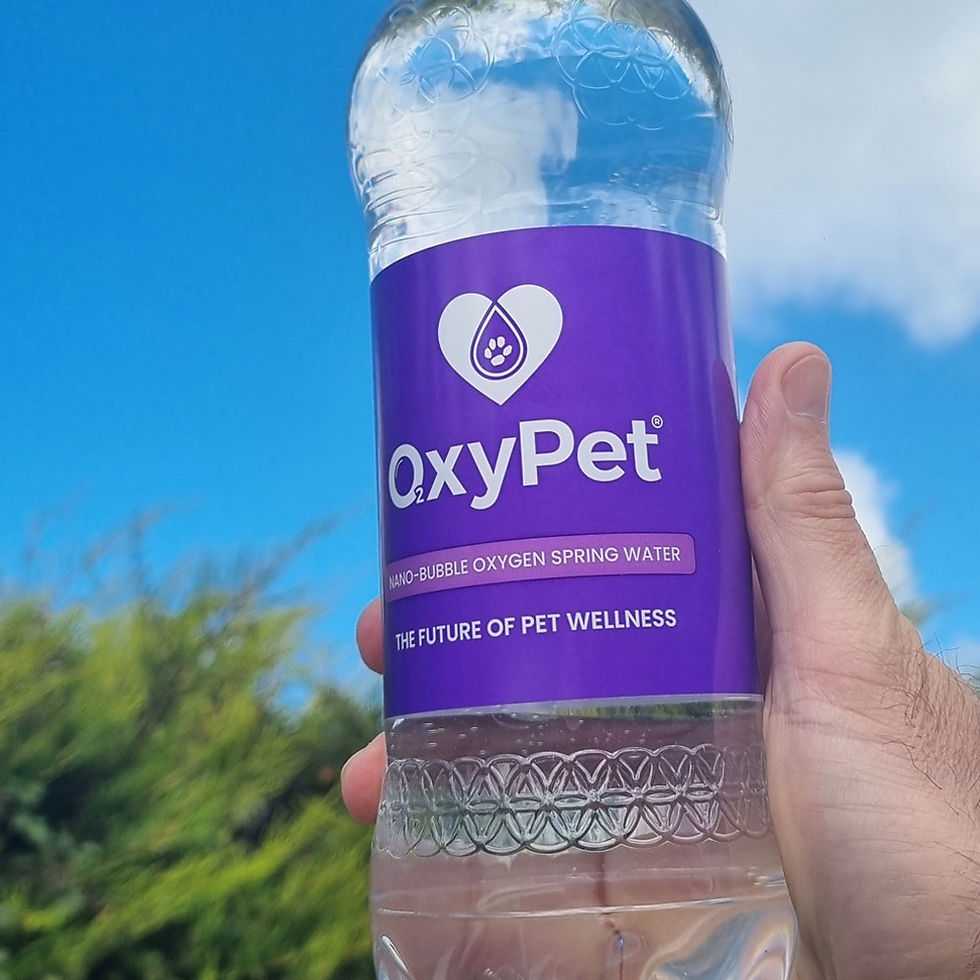
OxyPet is designed to support hydration in a more functional way.
Using nano-bubble oxygen technology within natural Cornish spring water, OxyPet increases dissolved oxygen while maintaining a smooth, still drinking experience.
For senior dogs, this may help support:
Consistent drinking behaviour
Hydration efficiency
Oxygen availability throughout circulation
Daily comfort and vitality
It is not a treatment or replacement for veterinary care, but a supportive wellness tool designed to align with the changing physiological needs of ageing dogs.
When to monitor hydration more closely
If a senior dog begins showing:
Reduced energy
Slower recovery
Reluctance to move
Increased stiffness
Behavioural changes
Hydration is one of the first foundational areas worth reviewing and sits at the top of the hierarchy of health.
While these changes may be age-related, hydration can influence how strongly they are felt.
FAQs
Do senior dogs need more water?
Not always more in volume, but often more consistent and better-supported hydration.
Why do older dogs drink less?
Changes in mobility, behaviour, routine, and natural ageing can all contribute.
Can hydration support joint comfort?
Hydration supports circulation, tissue health, and oxygen delivery, all of which can influence overall comfort.
Does water quality matter more for older dogs?
As dogs age, hydration efficiency and internal balance become increasingly important, making water quality a greater consideration.
Conclusion
Hydration becomes increasingly important as dogs age.
It supports circulation, oxygen delivery, cellular function, and the body’s natural ability to maintain balance.
By focusing on consistency, accessibility, and water quality, pet parents can support senior dogs in a simple yet meaningful way—helping maintain comfort, mobility, and well-being throughout later life.
Often, small daily improvements in hydration can make a bigger difference than expected over time.
Written by:
Co-Founder of OxyPet | Author of Mowgli The Underdog
Advocate for hydration, oxygen efficiency, and natural canine health


