

Why Dogs Need More Water in Summer: A UK Perspective
- May 10
- 4 min read
Updated: Jun 4
As temperatures rise throughout the warmer months in the UK, a dog’s hydration needs often change more than many pet owners realise.
Even moderate increases in temperature can affect how much water a dog requires, particularly when combined with exercise, travel, outdoor activity, or warmer indoor environments.
While many people associate dehydration only with extreme heat, the reality is that even subtle seasonal changes can place additional demands on a dog’s body.
As environmental temperatures rise, hydration becomes increasingly important not only for thirst but for helping the body regulate temperature, circulate oxygen, and maintain physiological balance.

How warmer weather affects hydration
Dogs regulate body temperature very differently to humans.
Rather than sweating through the skin, dogs primarily cool themselves through:
Panting
Respiratory heat exchange
Limited sweat glands through their paw pads
Panting increases evaporation and helps release body heat, but it also leads to greater moisture loss.
As temperatures rise throughout the warmer months, this process becomes more frequent and more demanding, increasing the body’s requirement for water to maintain balance.
Without sufficient hydration, the body must work harder to regulate internal temperature and sustain normal physiological function.
The link between heat, activity and fluid loss
Warmer weather naturally often brings increased activity.
During the warmer months, many dogs experience:
Longer walks
More outdoor play
Travel and adventures
Greater physical exertion
While beneficial, all of these increase fluid demand.
The harder a dog works physically, the more:
Moisture is lost through panting
Circulation increases
Oxygen demand rises
Internal cooling systems activate
Without proper hydration, dogs may struggle to recover efficiently after activity, leading to:
Fatigue
Reduced stamina
Slower recovery
Reduced comfort
Hydration supports not only cooling, but also the body’s wider ability to perform, regulate, and recover.
Why mild UK temperatures still matter
Unlike hotter climates, UK weather is often moderate, which can create a false sense of security.
However, hydration demands do not only increase in extreme heat.
Even mild warmth combined with:
Exercise
Humidity
Indoor heat retention
Car travel
Excitement or stimulation
can significantly increase a dog’s fluid needs.
This is particularly relevant because many pet owners may not recognise changes in hydration until a dog is already showing signs of fatigue or discomfort.
Preventative hydration is always more effective than reactive hydration.
Why oxygen and hydration matter together in heat
As temperatures rise and physical demand increases, the body’s need for oxygen also rises.
During warmer conditions, dogs rely on circulation not only to transport nutrients, but also to:
Deliver oxygen efficiently
Regulate body temperature
Support muscular recovery
Maintain cellular energy production
Hydration plays a central role in this process.
Without proper hydration, blood volume and circulation can become less efficient, placing greater strain on the systems responsible for cooling, recovery, and oxygen delivery.
This is why hydration and oxygen availability should be viewed together, particularly during periods of increased heat and activity.
Which dogs are most affected
Some dogs are naturally more vulnerable to heat-related changes in hydration.
These include:
Flat-faced breeds
Highly active dogs
Senior dogs
Larger breeds
Overweight dogs
These groups often work harder to regulate temperature or recover from exertion, increasing their dependence on effective hydration.
For these dogs especially, proactive hydration support can make a significant difference.
Supporting hydration during warmer months
Maintaining hydration during warmer weather is about more than simply offering water.
Helpful strategies include:
Providing fresh water consistently throughout the day
Refreshing bowls regularly
Offering water before, during, and after activity
Adjusting walk times to cooler parts of the day
Monitoring recovery after exercise
Hydration should be viewed as a proactive daily support strategy, not simply a reaction to thirst.
The body performs best when prepared in advance, rather than when trying to recover after demand has already increased.
Why hydration quality matters in warmer weather
Not all hydration is equal.

Drinking larger volumes of water does not automatically mean better hydration if the body is not efficiently absorbing and using that water.
During warmer periods, the body’s hydration demands increase rapidly.
This makes hydration quality increasingly important.
Superior hydration focuses not only on:
Volume consumed
but also:
Drinking consistency
Hydration efficiency
Oxygen availability
Functional support throughout circulation
As temperatures rise, improving the quality of hydration may be just as valuable as increasing its quantity.
Where OxyPet fits
OxyPet takes an oxygen-then-hydration-first approach.
Rather than simply encouraging increased drinking, OxyPet directly supports hydration by providing nano-bubble oxygenated Cornish spring water designed to help maintain hydration and oxygen availability in a more functional way.
By increasing dissolved oxygen while maintaining a smooth, still drinking experience, OxyPet supports:
Daily hydration consistency
Hydration efficiency
Oxygen availability throughout circulation
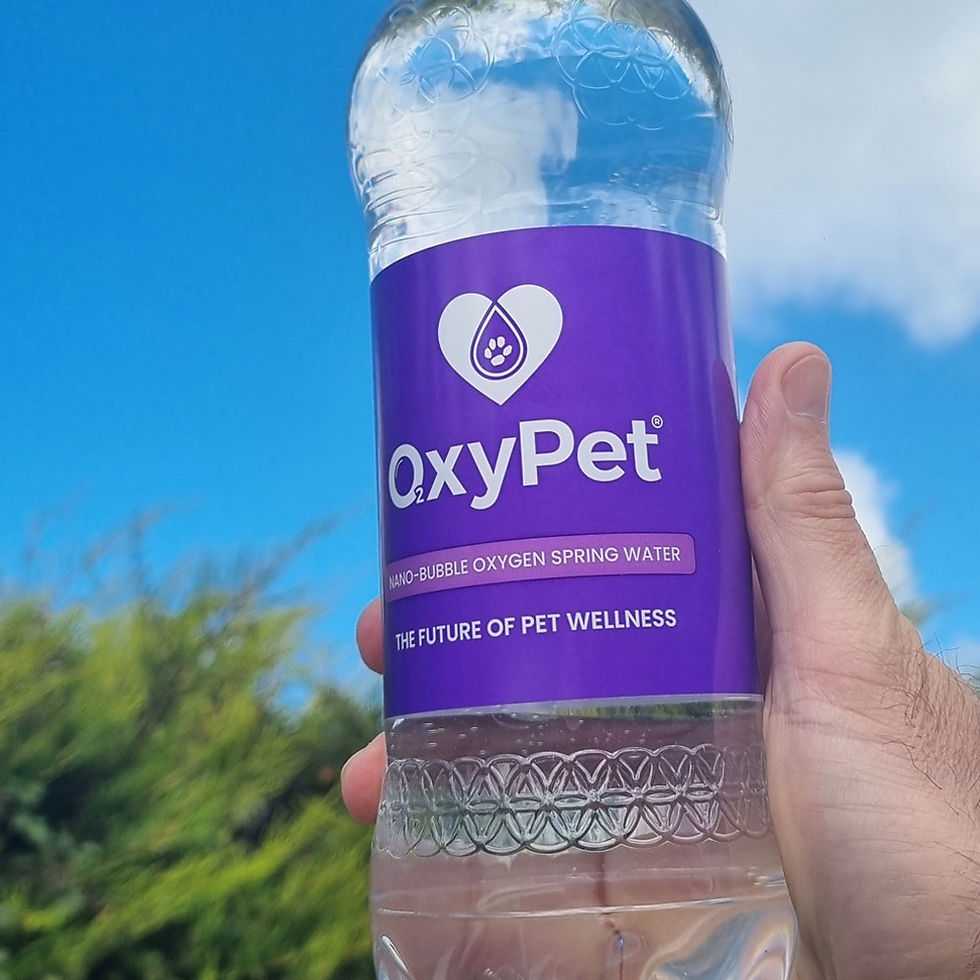
This makes it particularly suitable during warmer months when dogs are more active, exposed to increased temperatures, or under greater physiological demand.
It works alongside the body’s natural processes rather than altering them.
OxyPet also contains no known chemicals, additives, or unnecessary toxins. This aligns with a cleaner approach to hydration, as substances consumed through food and water must still be processed by the body’s internal systems. Where additional compounds are present, this may place greater demand on organs responsible for filtration and balance, including the liver and kidneys. By focusing on purity alongside functionality, OxyPet supports hydration without imposing unnecessary burden on the body.

FAQs
Do dogs need more water in summer?
Yes. Increased temperatures and activity levels naturally raise fluid requirements.
How can I tell if my dog needs more water?
Look for increased panting, slower recovery after exercise, reduced energy, or signs of fatigue.
Is hydration important even on mild UK days?
Yes. Even moderate warmth, combined with exercise, can significantly increase hydration needs.
Should dogs drink before walks in warm weather?
Yes. Supporting hydration before activity can help maintain balance during exertion.
Conclusion
Hydration needs naturally increase throughout the warmer months in the UK.
As temperature, activity, and physical demand rise, the body requires more water to regulate temperature, support circulation, and maintain oxygen delivery.
By adjusting routines, proactively supporting hydration, and focusing on both the quality and quantity of hydration, pet owners can help their dogs remain comfortable, active, and better supported during warmer weather.
Often, the most effective approach is not to wait until thirst appears, but to prepare the body before increased demand begins.
Written by:
Co-Founder of OxyPet | Author of Mowgli The Underdog
Advocate for hydration, oxygen efficiency, and natural canine health


