

Signs of Dehydration in Dogs UK: What Every UK Pet Owner Should Know
- Apr 30
- 5 min read
Updated: Jun 4
Hydration is often treated as one of the simplest aspects of dog care. A full bowl is usually seen as reassurance that everything is covered. Yet across the UK, many dogs experience subtle, ongoing under-hydration that goes unnoticed.
This is not because owners are unaware, but because dehydration rarely presents itself in obvious ways. In most cases, it develops gradually, showing up in small behavioural and physical changes long before it becomes severe.
Understanding these early signs allows pet owners to respond sooner and support their dog’s wellbeing more effectively.
In modern environments, dogs rely entirely on what we provide. This makes it important not only to offer water, but to understand how consistently it is consumed and how effectively it supports the body.
Why dehydration in dogs is often missed: signs of dehydration in dogs UK
Dehydration is commonly associated with extreme heat or illness, but mild signs of dehydration in dogs UK is far more common and often part of everyday life.
Factors such as dry food diets, indoor heating, travel, and changes in routine can all increase a dog’s hydration needs. When those needs are not fully met, the body adapts quietly.
This is why many of the early signs are subtle. Dogs may still drink water and appear healthy, but show slight reductions in energy, slower recovery after activity, or changes in behaviour that are easy to overlook.
In many cases, the issue is not lack of access to water, but inconsistency in drinking behaviour or how the dog responds to the water available.
Common signs of dehydration in dogs
Recognising dehydration requires observation rather than relying on a single symptom.
A dog that is not fully hydrated may develop dry or slightly sticky gums, rather than the usual smooth and moist texture. Skin may take longer to return to position when gently lifted, indicating reduced elasticity.
Behaviour often provides the clearest signal. Dogs may seem less energetic, take longer to recover after walks, or appear less enthusiastic during play. Panting may also become more noticeable, particularly when it does not match the level of activity.
These changes are not always dramatic, but when seen together, they can indicate that hydration is not being fully supported.
Subtle changes such as reduced focus, increased rest, or lower engagement can also be early behavioural indicators, even before physical signs become more obvious.
The role of hydration in circulation and oxygen delivery
Hydration plays a central role in circulation. Water supports blood volume, allowing oxygen and nutrients to move efficiently throughout the body.
When hydration levels drop, even slightly, circulation becomes less efficient. This can affect how well oxygen is delivered to tissues, influencing energy, recovery, and overall comfort.
For dogs that already have higher physical demands, such as flat-faced breeds or active dogs, this becomes even more relevant.
This highlights why hydration is not just about preventing dehydration, but about supporting efficient oxygen delivery and daily physiological balance.

Which dogs are more prone to dehydration
Some dogs are naturally more sensitive to changes in hydration.
Flat-faced breeds often work harder to breathe, increasing fluid demand. Active dogs lose more moisture through exertion, while senior dogs may drink less consistently. Dogs fed dry food rely almost entirely on what they drink, making hydration quality particularly important.
In UK households, indoor environments can also play a role, particularly during colder months when heating reduces air moisture.
Dogs that are selective with water, or those that show inconsistent drinking habits, may also be more prone to mild under-hydration over time.
Why water quality matters as much as quantity
Most dogs are given access to water consistently, but hydration is not only about availability. It is also about how effectively that water supports the body once consumed.
Standard tap or filtered water provides basic hydration, but it does not necessarily optimise absorption or oxygen availability. It also varies in composition depending on location, with growing awareness around environmental contaminants in UK water systems beginning to shape how pet owners think about what their dogs drink.
Recent coverage in Westies & Besties Magazine highlighted increasing concern among experts regarding substances such as so-called “forever chemicals” (PFAS), which have been detected in waterways and can persist in the environment over time. While research is ongoing and regulatory standards continue to evolve, this has prompted wider conversations around long-term exposure and the importance of water quality for both humans and animals.
Rather than causing alarm, this shift is encouraging a more informed and proactive approach to hydration. Pet owners are beginning to consider not just whether water is available, but how consistent, clean, and supportive it is as part of a daily routine.
From a functional perspective, the body must process everything it consumes. This includes substances present in water. When this process becomes less efficient, it can place additional demand on organs responsible for filtration and balance, such as the liver and kidneys. Hydration plays an important role in supporting these natural processes.
This is why two dogs drinking similar amounts of water may experience different levels of hydration depending on how effectively that water is utilised within the body.
This is where newer approaches to more bio-available oxygen and superior hydration are beginning to emerge.
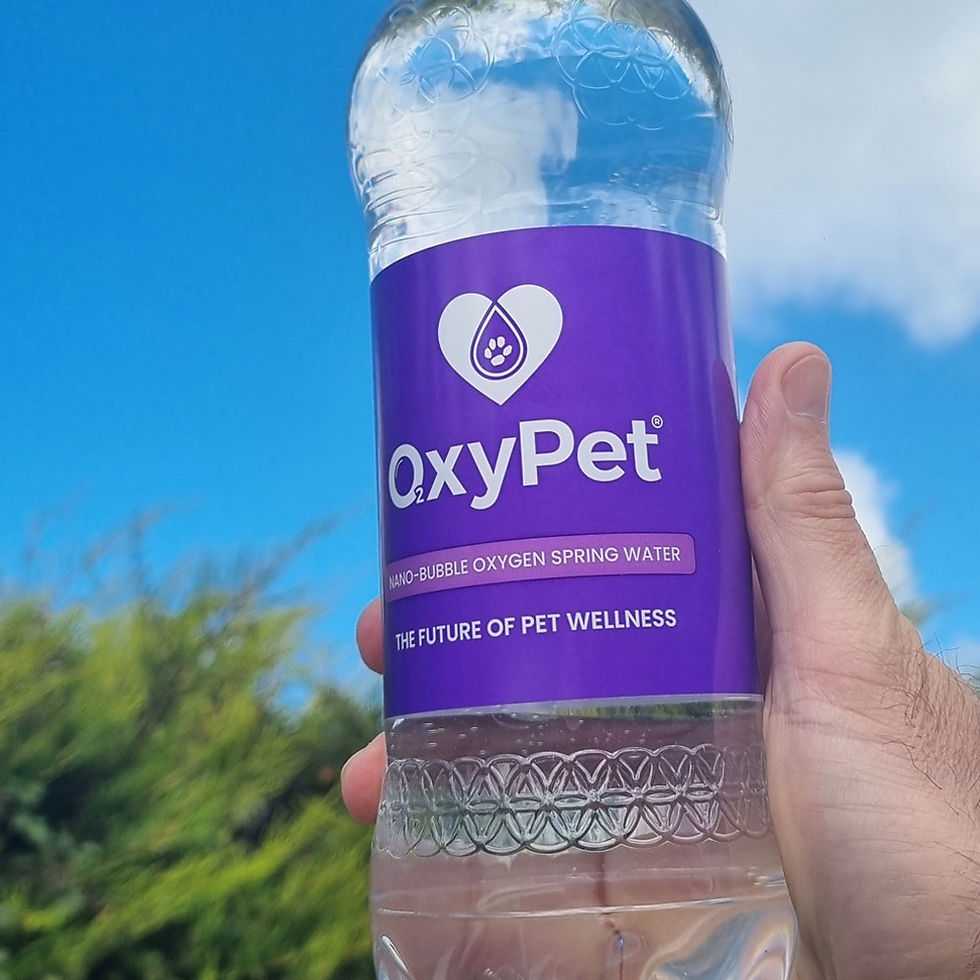
OxyPet
OxyPet is a nano-bubble oxygenated Cornish spring water designed to provide more available oxygen in a more functional way. By increasing dissolved oxygen within the water, it works alongside natural physiological processes to support hydration and oxygen availability together.
For some dogs, differences in taste, freshness, and drinking experience may encourage more consistent intake. Over time, this can support more stable hydration patterns.
It is not a treatment or replacement for veterinary care, but a simple daily way to improve the foundation of hydration.
When to take action
If signs of dehydration are mild, small adjustments such as refreshing water more frequently, monitoring behaviour, and improving water quality can be helpful.
Observing drinking habits—rather than just availability—can often provide early insight.
If symptoms become more noticeable or are accompanied by lethargy, discomfort, or changes in appetite, veterinary guidance should always be the first step.
Hydration is a foundational part of health, and early attention often leads to the best outcomes.
FAQs
How can I tell if my dog is dehydrated?
Look for the quality of their skin, changes in gum moisture, brightness of eyes, skin condition, elasticity, energy levels, and recovery after activity.
Is dehydration common in UK dogs?
Yes, particularly mild under-hydration influenced by diet, environment, routine, and indoor living conditions.
Does drinking water always mean a dog is hydrated?
Not necessarily. Effective hydration depends on absorption, consistency, and how the body uses the water.
Conclusion
Dehydration is rarely obvious in its early stages, but it can influence how a dog feels and functions each day and is obvious in the skin and eyes.
By recognising subtle signs and taking a more considered approach to hydration, focusing on behaviour, consistency, and water quality, pet owners can support long-term wellbeing in a simple and practical way.
Often, it is not just about offering water but about understanding how the dog responds to it.
Written by:
Co-Founder of OxyPet | Author of Mowgli The Underdog
Advocate for hydration, oxygen efficiency, and natural canine health


